
Ambient documentation for trauma and critical care
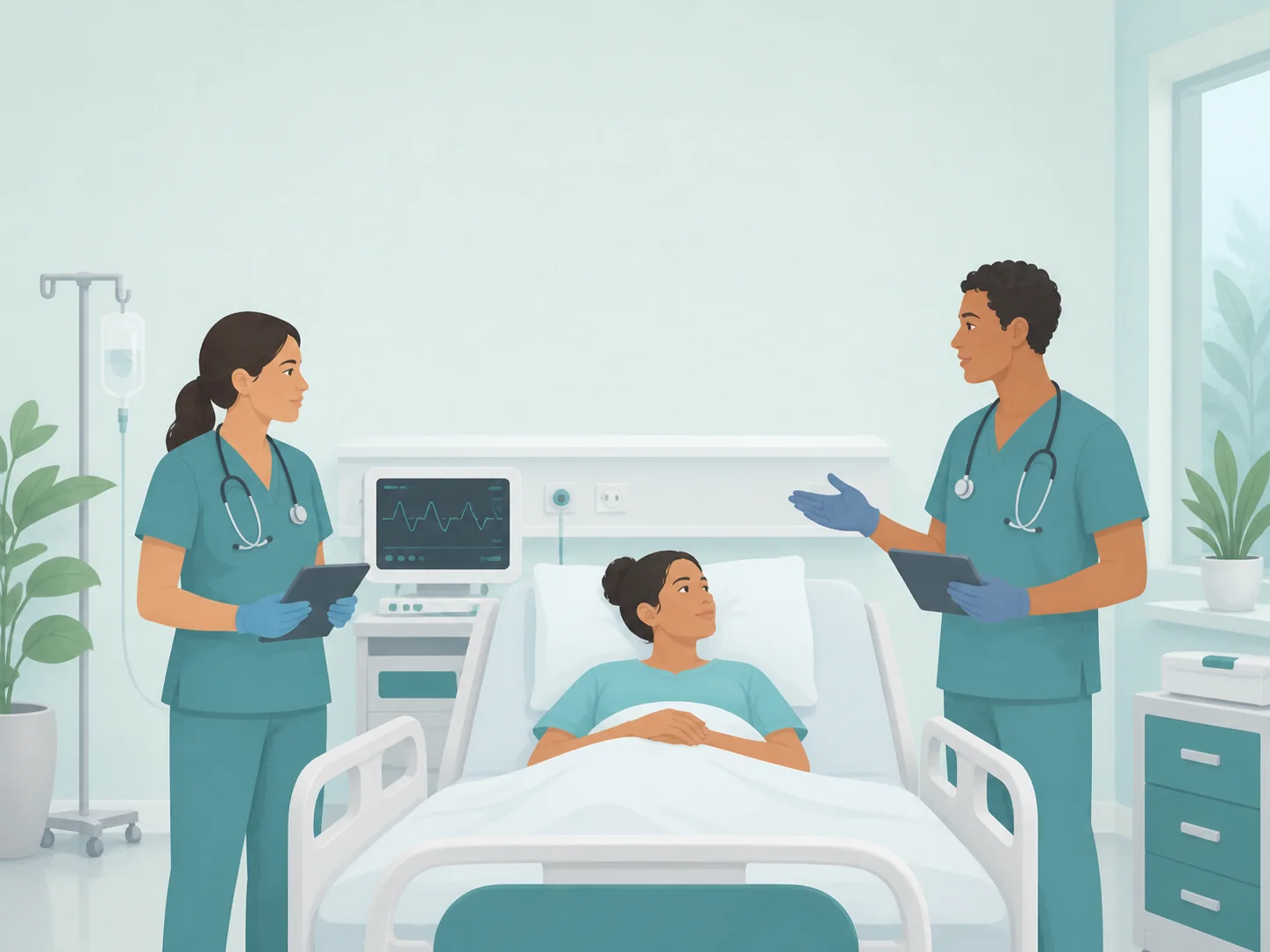
Augnito Omni may support selected reviews and follow-up discussions in trauma and critical-care pathways, subject to assessment of the environment and use case.

The documentation challenge
Not every acute interaction suits ambient capture
Multiple speakers, interruptions and rapidly changing information need careful consideration. Planned reviews, family discussions and recovery follow-up may offer a clearer evaluation setting than emergency activity.
Support documentation where a focused conversation is appropriate. Augnito Omni is an ambient voice technology (AVT) platform that converts clinical conversations into draft documentation for clinician review. Unlike dictation, the clinician does not need to compose the entire note aloud.
Planned clinical review notes
Configure planned clinical review notes around the service’s documentation requirements. Check that the draft separates the reported history, clinical assessment and agreed next steps.
Family discussion summaries
Use the consultation to prepare family discussion summaries for review. Confirm the clinical detail and distinguish actions agreed from options discussed.
Recovery and follow-up correspondence
Draft recovery and follow-up correspondence from the relevant conversation, with an appropriate level of detail for the recipient. The clinician checks and approves the document before use.
Clinical decisions stay with the clinician
Omni supports documentation. It does not replace clinical judgement, examination or professional responsibility for the final record.
Augnito Omni in practice
From conversation to a record you have reviewed.
For trauma and critical care, start with the consultation and the documents the team needs to complete. Templates can be configured around local requirements; the agreed configuration determines the available outputs.
Spoken information becomes a draft, not a final clinical record. Check omissions, clinical meaning and any suggested coding before approval.
Explore Augnito Omni's ambient workflow- Conduct the consultation
Use the agreed recording and patient-information arrangements for the setting.
- Capture and structure
Omni processes the clinical conversation and prepares the configured draft notes or documents.
- Review, edit and approve
The clinician checks the content, adds information where needed and approves the final output.
- Complete the workflow
Use the approved documentation in the agreed clinical record or correspondence process.
For clinical and digital leaders
Evaluate the fit for trauma and critical care.
Assess suitability with clinical safety and operational leads before use. Keep emergency assessment, monitoring and time-critical decisions within established clinical processes.
Discuss standalone use or an integration with the existing EPR and correspondence workflow. Availability depends on the product configuration, system and local implementation; confirm requirements with Scribetech rather than assume a connection is already in place.
Explore clinical speech integration options · Read about data security
Plan the next conversation.
Ambient documentation for tertiary and complex care Ambient documentation for rehabilitation and intermediate care Ambient documentation for NHS hospitals NHS England: guidance on adopting ambient scribing
For services in England, NHS England provides adoption guidance for clinical and digital teams. Local clinical safety and information governance review remains part of deployment planning.
See the workflow
Book a demonstration Discuss ambient documentation for trauma and critical care.
Bring your consultation types, document templates and system requirements to a demonstration.